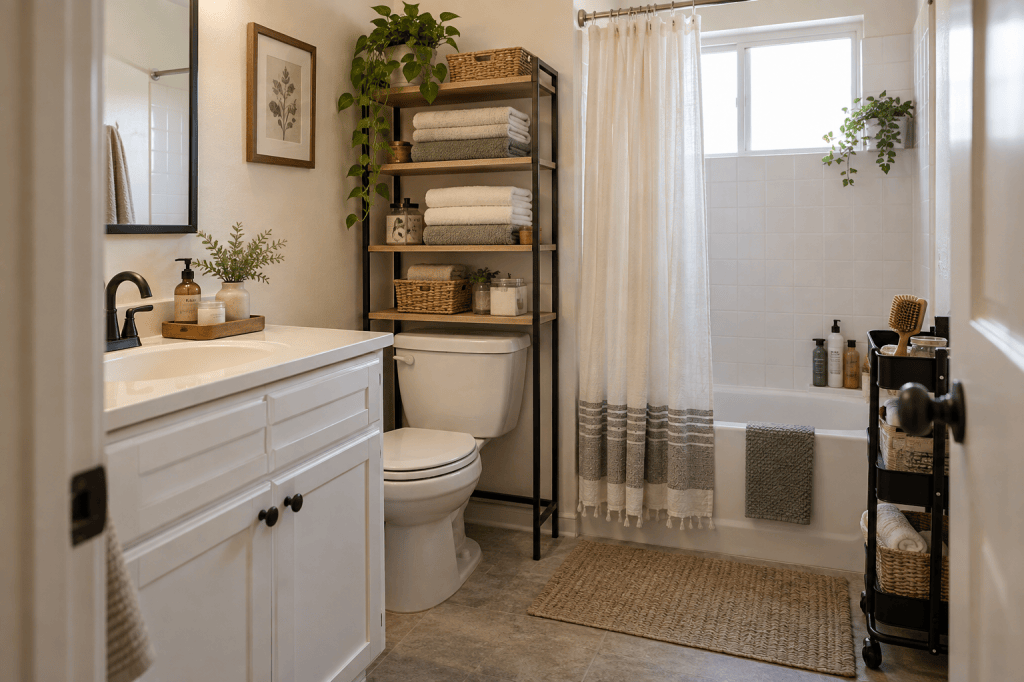
A small rental bathroom does not need to store every backup product within arm’s reach. It needs to keep the daily routine easy, the floor clear, and damp items able to dry. The most useful changes usually come from editing what stays in the room, assigning one place to each routine, and choosing organizers that can leave with you.
By The Small Standard Editorial Team · September 2026
The ideas below are intended for renters who cannot drill, replace fixtures, or make permanent changes. Check your lease before attaching anything, follow every organizer’s weight and surface instructions, and test removable adhesives in an inconspicuous spot. Keep ventilation openings, plumbing access, electrical outlets, and heat sources clear.
Editorial note: The room images in this guide are AI-assisted visualizations created to demonstrate the storage principles described. Product-specific installation and weight guidance should always take precedence.
At a glance
| Problem area | Best first move | Measure before buying |
|---|---|---|
| Crowded vanity | Two handled bins | Interior width, depth, pipes, and hinges |
| Empty space above the toilet | Freestanding étagère | Tank height, lid clearance, and wall depth |
| No linen closet | Slim rolling cart | Floor width, baseboards, and door swing |
| Too many shower bottles | Rust-resistant hanging caddy | Showerhead, enclosure, and bottle height |
| Towels with nowhere to dry | Over-door rack | Door thickness and top clearance |
1. Remove what should not live in the bathroom
Begin by taking everything out of one cabinet or drawer. Discard empty packaging and expired products according to their labels, then move duplicates and occasional-use items elsewhere. A small bathroom works better when it holds the current routine rather than the entire household inventory.
Medicine deserves special attention. Heat and humidity can affect some products, and the U.S. Food and Drug Administration recommends checking each label and generally choosing a cool, dry storage location instead of a damp bathroom cabinet. Keep medicines and cleaners locked and out of reach when children could access them.
2. Measure around plumbing, doors, and fixtures
Measure the usable width, depth, and height inside the vanity rather than relying on its exterior dimensions. Note pipes, shutoff valves, hinges, drawer tracks, and the space required to reach a leak. Measure the bathroom door fully open, the clearance above it, and the narrowest section of any gap where a cart might go.
Photograph the measurements before shopping. A renter-friendly organizer is only useful if the door still closes, the toilet lid still lifts, and the plumbing remains accessible.
3. Divide the vanity into two daily-use bins
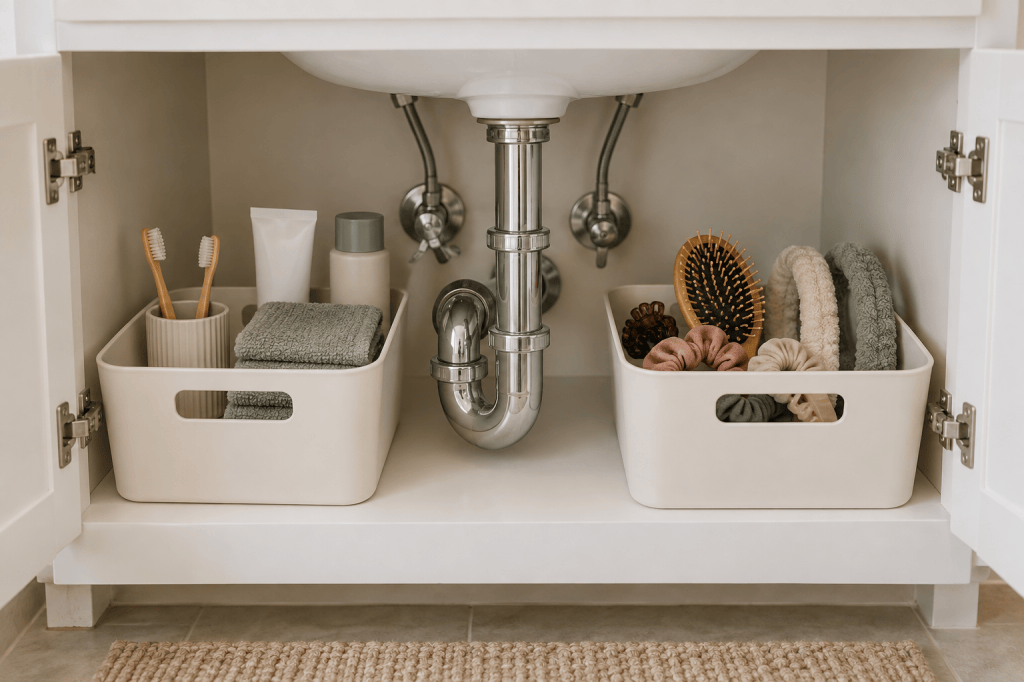
Instead of filling the vanity with many small containers, use two handled bins for the routines that happen most often. One might hold dental and morning essentials; the other might hold hair or evening-care items. Pulling out a complete routine is easier than reaching around bottles at the front of a deep cabinet.
Choose washable bins that leave a little open space around the pipes. Avoid tightly packing the cabinet so moisture or a slow leak remains visible.
4. Add a freestanding shelf above the toilet
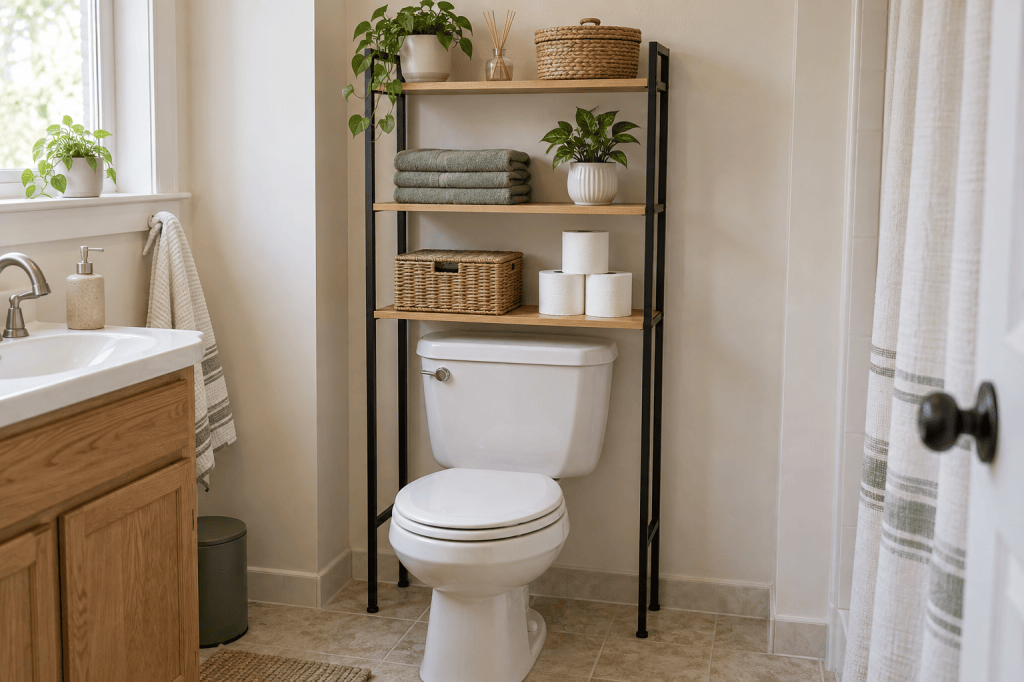
A narrow freestanding étagère can use the vertical space above a toilet without drilling into the wall. Reserve the easiest shelf for spare toilet paper or folded hand towels, and use a closed or lidded container for visually busy backup supplies.
Measure the toilet tank, flush control, lid movement, and distance from the wall. The unit should stand firmly on the floor without leaning on the tank. Follow its anti-tip and assembly instructions; if the manufacturer requires permanent wall anchoring, it is not the right renter-friendly choice for that room.
5. Use a slim cart as a movable linen closet
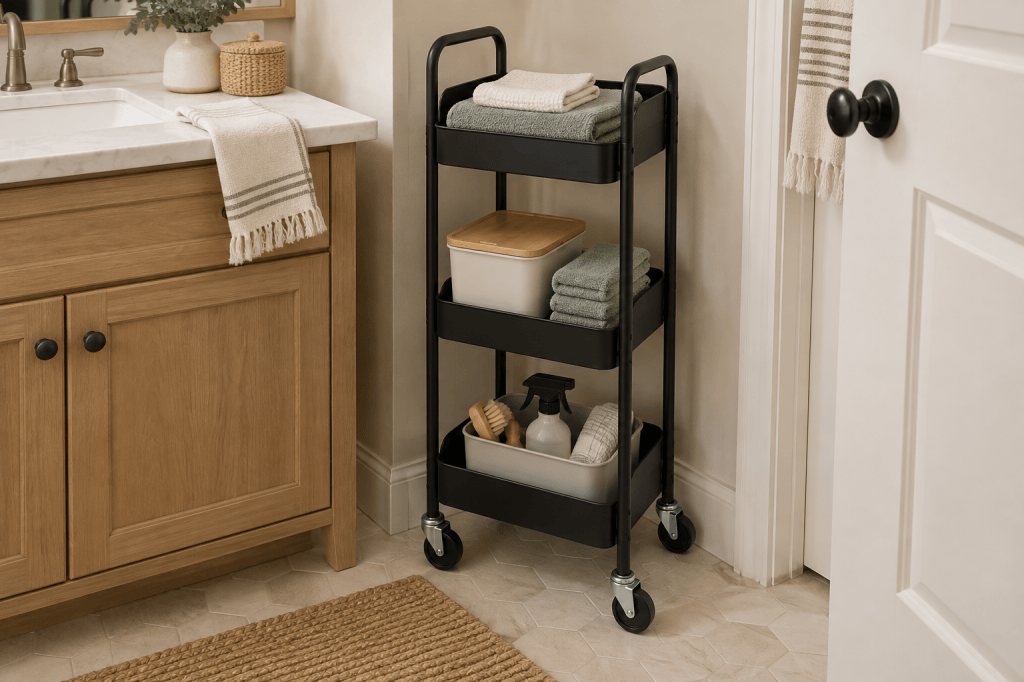
A small rolling cart can hold towels, washcloths, and a limited supply of toiletries when the bathroom has no linen closet. Give each level one purpose and leave enough room to remove items without knocking over the shelf above.
Choose a finish intended for humid areas and keep the cart outside the direct splash zone. Wheels should lock or remain stable on the bathroom floor. Measure baseboards and door swing so the cart can move out for cleaning.
6. Hang lightweight items over the door
An over-door rack can provide a drying place for robes, clothing, or lightweight towels without adhesive. It is especially useful when the existing towel bar is too small for the household.
Check the door thickness and the gap between the door and frame. Add protective pads if the product provides them, and confirm the rack does not scrape paint or prevent the door from closing. Avoid heavy baskets that make the door difficult to operate.
7. Choose one shower caddy that fits the enclosure
A single well-fitted shower caddy is usually calmer and easier to clean than several suction baskets. Depending on the enclosure, a rust-resistant caddy can hang from the showerhead, sit in a corner, or hook over a glass partition. Keep only the products currently in use inside the shower.
Do not hang weight from plumbing or glass unless the organizer is designed for that exact use. Keep controls, drains, grab bars, and door tracks clear. Remove the caddy regularly so both it and the wall behind it can dry.
8. Give the counter one shallow tray
A small tray can define the few items allowed to remain on the vanity: perhaps hand soap, a toothbrush cup, and one daily-use product. The boundary prevents the counter from slowly becoming storage for everything.
Choose a washable, water-resistant material and keep the tray away from the sink edge. If the tray is full, return an item to its cabinet before adding another.
9. Turn deep shelves into pull-out storage
Handled bins make deep shelves behave more like drawers. Group supplies by use—extra soap, hair care, travel items, or cleaning cloths—so one category can be removed without rearranging the entire cabinet.
Rectangular bins generally make better use of shelf space than round baskets. Leave labels visible when they contain safety, expiration, or care information, and avoid decanting cleaners or medicines into decorative containers.
10. Add removable hooks only outside the splash zone
A few removable hooks can hold a hair towel, shower cap, lightweight brush, or small toiletry bag. Place each hook where it supports a specific action rather than treating every blank surface as storage.
Confirm that the adhesive is approved for the surface and humidity level, prepare it exactly as directed, and observe the stated curing time. Do not use adhesive hooks for glass, appliances, heavy objects, or anything positioned where a fall could cause injury.
11. Use the side of the vanity for one narrow organizer
If the vanity has an exposed side outside the wet zone, a removable shallow pocket may hold a hairbrush or another lightweight tool used every day. Test the organizer’s position with cabinet doors and drawers fully open before attaching it.
Keep electrical grooming tools unplugged and stored according to their manufacturer’s instructions. Never place cords, chargers, or electrical devices where they can fall into a sink, tub, or shower.
12. Store extra toilet paper vertically
A narrow freestanding holder or lidded floor basket can use a small gap beside the toilet without crowding the room. Store only a practical quantity and keep it far enough from the bowl and shower to stay dry.
The holder should be easy to lift when cleaning the floor. Avoid tall, unstable stacks; a shorter container that fits the available space is safer and visually quieter.
13. Corral cleaning supplies in one removable caddy
Keep bathroom cleaning products together in a handled caddy that can be removed before use. Storing the whole routine as one unit makes it easier to clean the room and easier to notice when a product is running low.
Keep products in their original containers, follow every label, and never mix chemicals. The U.S. Consumer Product Safety Commission advises using latches or locks and keeping medicines and household cleaners out of children’s reach.
14. Let towels and tools dry before putting them away
Closed storage is useful for visual calm, but damp towels, washcloths, brushes, and shower tools need airflow. Give wet items a place to hang without touching the floor or crowding together. Return them to a basket or cabinet only after they are dry.
If moisture or mold keeps returning, storage is not the only issue. The U.S. Environmental Protection Agency recommends addressing leaks, increasing ventilation, and drying wet materials completely. Report persistent leaks or building-related moisture problems to the appropriate property contact.
15. Organize by routine, then by frequency
Place daily items where they can be reached comfortably. Weekly supplies can sit lower or higher, and sealed backups can occupy the least convenient shelf. Keep morning items together, shower items together, and cleaning supplies separate from personal-care products.
Notice what repeatedly gets left on the counter or floor. That is usually evidence that its assigned home is too full, too far away, or too awkward to use. Adjust the system around the routine instead of expecting the routine to adapt to a complicated organizer.
How to keep a small bathroom from feeling crowded
- Keep most of the floor visible, especially the path to the sink, toilet, and shower.
- Use one or two larger storage pieces instead of many unrelated mini-organizers.
- Repeat a limited palette of finishes and containers.
- Keep daily items easy to reach and backups out of the prime positions.
- Leave ventilation openings, plumbing access, outlets, and heat sources clear.
- Remove an item before adding another organizer.
A small bathroom feels more functional when storage creates breathing room rather than filling every surface.
Frequently asked questions
How can I add bathroom storage without drilling?
Use a freestanding over-toilet shelf, slim rolling cart, handled vanity bins, an over-door towel rack, and a shower caddy suited to the enclosure. Removable hooks can help with light objects when the surface and humidity requirements are followed carefully.
What should not be stored in a humid bathroom?
Many medicines, paper goods, delicate cosmetics, spare electronics, and items that must remain dry are better stored elsewhere. Always follow the product label or manufacturer’s storage instructions.
Are suction cups or adhesive hooks safe in a shower?
Only use a product when its instructions specifically approve the surface, moisture exposure, item weight, and location. Even then, reserve it for lightweight, nonbreakable objects and inspect it regularly. Do not let an organizer interfere with grab bars, controls, drains, or doors.
How do I organize a bathroom with no vanity?
Use one slim freestanding cart for daily supplies, an over-door rack for towels, and a shower caddy for products used in the shower. Keep backups in a dry closet or bedroom storage area rather than forcing everything into the bathroom.
How much backup stock belongs in a small bathroom?
Keep only what fits comfortably in one defined container without hiding plumbing, blocking access, or crowding daily essentials. Store larger household reserves in a dry secondary location.
A calmer bathroom starts with fewer damp, crowded surfaces
The goal is not to turn every wall and corner into storage. It is to make the room easier to use and easier to keep dry: a clear counter, towels that can air out, supplies that can be lifted for cleaning, and plumbing that remains visible.
Start with the surface that causes the most friction and make the smallest reversible change that solves it.
Continue reading
- 13 Small Kitchen Storage Ideas for Renters—No Renovation Required
- 11 Small Apartment Storage Ideas That Don’t Waste Floor Space
- Browse the Ideas collection
Small, well lived.


Responses
[…] 15 Small Bathroom Storage Ideas for Renters—No Drilling Required […]
LikeLike
[…] For the bathroom, continue with 15 Small Bathroom Storage Ideas for Renters—No Drilling Required. […]
LikeLike