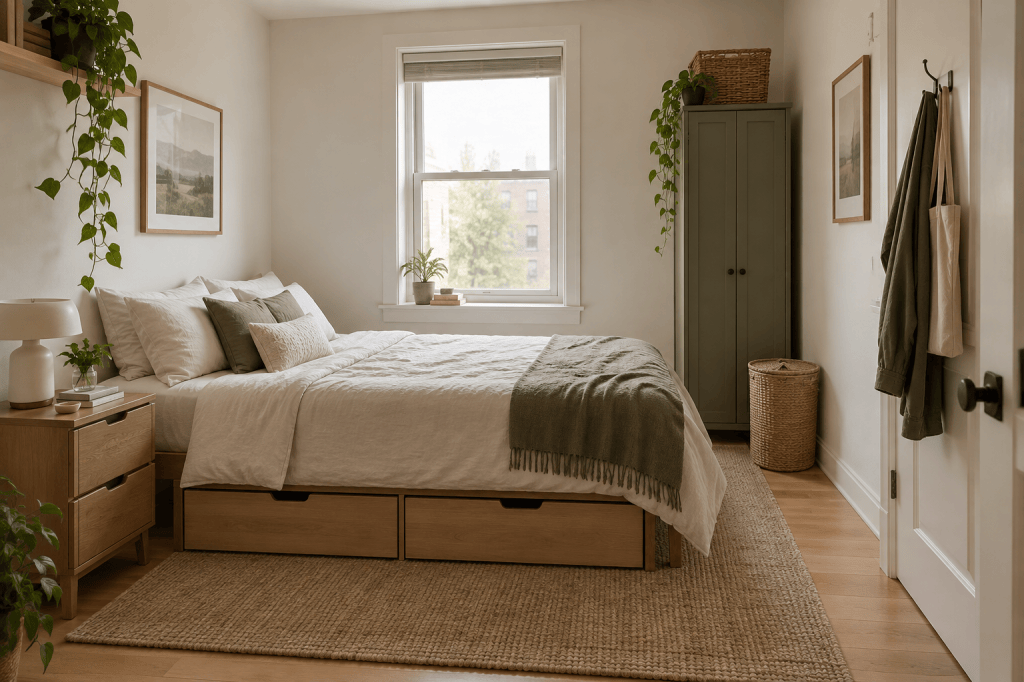
A small bedroom does not need storage on every wall. It needs a clear path to the bed, a home for the things used every day, and a contained place for clothing and linens. The most useful changes usually begin with the bed, the closet, and the few feet around the doorway—not with another decorative basket.
By The Small Standard Editorial Team · September 2026
The ideas below are intended for renters who cannot add built-ins or make permanent changes. Measure before buying, check your lease before attaching anything, and follow every furniture maker’s assembly, anchoring, weight, and clearance instructions. Keep heaters, vents, windows, outlets, and walking routes unobstructed.
Editorial note: The room images in this guide are AI-assisted visualizations created to demonstrate the storage principles described. Product-specific assembly, anchoring, and safety guidance should always take precedence.
At a glance
| Problem area | Best first move | Measure before buying |
|---|---|---|
| Unused space under the bed | Shallow lidded bins or fitted drawers | Usable height, center supports, and pull-out space |
| No bedroom closet | Low, stable freestanding wardrobe | Ceiling height, baseboards, doors, and anchoring needs |
| Overloaded nightstand | Narrow cabinet with drawers | Bed height, outlet position, and walking clearance |
| Small existing closet | One hanging organizer or shelf divider | Rod strength, shelf depth, and garment length |
| Clothes collecting on a chair | One hamper and one temporary-wear hook | Door swing, ventilation, and floor footprint |
1. Decide what the bedroom actually needs to hold
Begin with the room’s job: sleeping, dressing, and perhaps reading or working. Remove empty packaging, clothing that belongs elsewhere, and household backups that have migrated into the bedroom. A small room becomes easier to organize when it is not carrying unrelated storage for the entire apartment.
Separate what remains into daily, weekly, seasonal, and sentimental categories. Daily items deserve the easiest drawers and hooks. Seasonal items can go under the bed or on a high closet shelf. Sentimental pieces should have one defined container rather than spreading across several surfaces.
2. Measure the bed, doors, and true walking path
Measure the usable clearance under the bed, including any center support, low slats, or sagging fabric. Then measure the open floor needed to pull out a bin. A container that technically fits underneath is not useful if it cannot clear the wall or nearby dresser.
Open every door and drawer fully and mark the narrowest point in the walking path. Photograph the measurements before shopping. The aim is to add capacity without making the bed harder to reach or creating a nighttime obstacle.
3. Use shallow, lidded storage under the bed
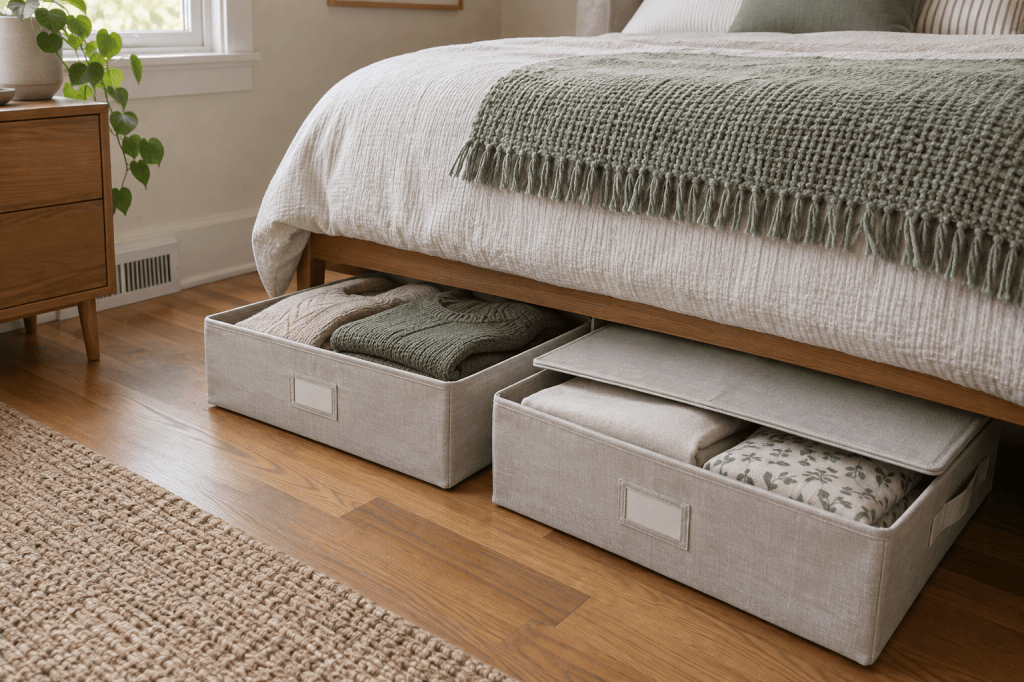
Under-bed space is best for contained categories such as spare bedding, off-season clothes, or rarely used accessories. Choose shallow bins that can be removed without lifting the mattress, and leave enough room for air to circulate around the bed frame.
Soft-sided or low-profile lidded containers help keep dust away while remaining lighter than large rigid tubs. Avoid loose piles, overfilled bags, and containers so deep that they scrape the frame. If the bed has manufacturer-designed drawers, use their stated weight limits.
4. Raise the bed only with an approved solution
A few additional inches can make low under-bed storage possible, but improvised blocks or mismatched risers can make a bed unstable. Use only a compatible riser or height-adjustment method approved for the specific bed frame, and follow its placement and weight instructions exactly.
After changing the height, check that the bed does not rock, the legs sit fully on the supports, and getting in and out still feels comfortable. If the frame has wheels, unusual feet, or a center leg configuration the riser does not accommodate, skip this idea.
5. Replace an open table with a narrow drawer nightstand
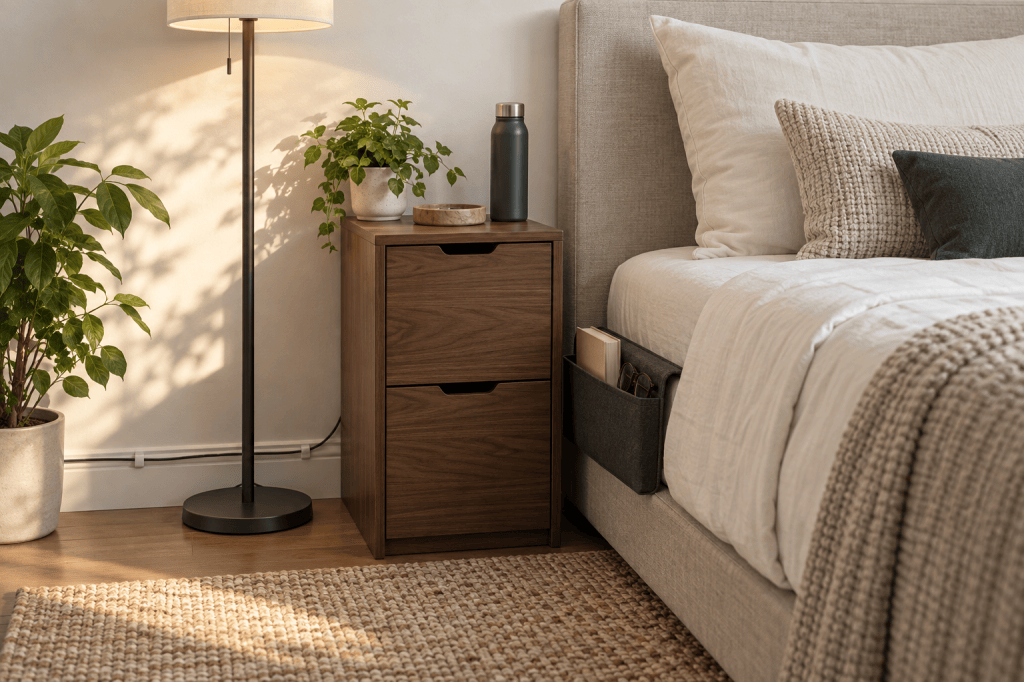
A compact nightstand with drawers can store charging accessories, reading material, and personal items while using roughly the same footprint as an open table. Keep the top limited to the few things needed at bedtime so it remains easy to clean.
Match the top of the cabinet roughly to the mattress height and protect the walking path beside the bed. Keep cords away from bedding and places where feet can catch them; do not overload an outlet or hide heat-producing adapters inside a closed drawer.
6. Add a bedside caddy for lightweight essentials
When even a narrow nightstand will not fit, a soft bedside caddy can hold a book, reading glasses, or a sleep mask. Choose one designed for the bed configuration and keep it lightly loaded so it does not pull, bunch the bedding, or interfere with the frame.
A caddy is not the place for drinks, hot devices, medication that must be secured, or heavy electronics. Treat it as a pocket for two or three lightweight essentials rather than a replacement for a full drawer.
7. Build one stable freestanding clothing zone
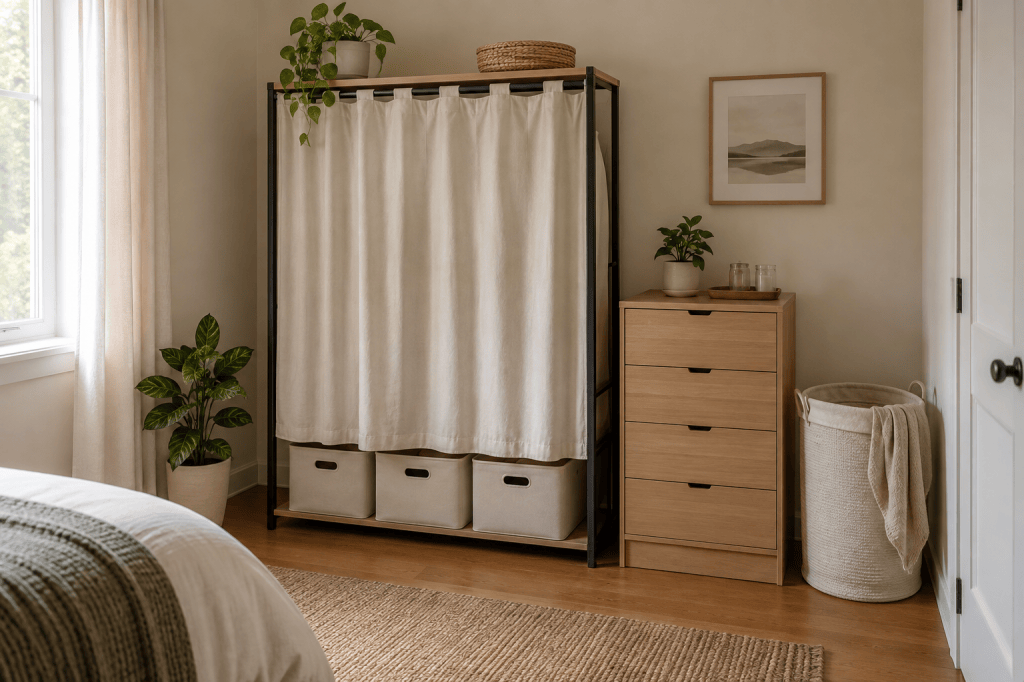
If the bedroom has no closet, keep clothing storage together instead of scattering racks, drawers, and baskets around the room. A low or medium-height freestanding wardrobe can combine a short hanging section, a shelf, and a few closed bins in one visual zone.
Stability matters more than maximum height. Follow the furniture maker’s anchoring instructions and discuss any required wall attachment with the property owner rather than omitting it. The U.S. Consumer Product Safety Commission’s Anchor It guidance recommends securing furniture according to the manufacturer’s directions, especially where children may be present.
8. Make an existing closet work in zones
Divide the closet into hanging clothes, folded clothes, shoes, and one category of accessories. A single fabric hanging organizer can add shelves without drilling, while shelf dividers can keep folded stacks from leaning into one another.
Check the closet rod’s condition and capacity before adding weight. Do not hang a heavy organizer from a weak or bowed rod, and keep the floor clear enough to see leaks, pests, or moisture. One well-defined organizer is usually more useful than several small systems competing for space.
9. Use the back of the door selectively
An over-door hook or shallow organizer can hold a robe, tomorrow’s outfit, or a few lightweight accessories. First check the door thickness, hinge condition, and clearance between the door and frame. Protective pads can reduce rubbing when they are included with the product.
Do not load the door with dense shoe racks or heavy bags that make it harder to open. The door is part of the room’s exit path; it should move freely and remain easy to operate.
10. Give worn-once clothes one temporary home
Clothing that is not clean enough for the closet but not ready for the laundry often creates the familiar bedroom chair pile. Assign it one small, ventilated location: a single hook, a short valet stand, or one section of an over-door rack.
Limit the space deliberately. When it fills, return clean items to the closet or move washable items to the hamper. A temporary zone works because it contains the decision rather than allowing it to spread across furniture.
11. Choose one hamper that fits the routine
Place the hamper where clothes are actually removed, not wherever an empty corner happens to exist. A tall narrow hamper saves floor area; a divided hamper can reduce sorting later, but only if both sections are large enough for the household’s normal laundry cycle.
Choose a ventilated design and avoid blocking a heater, return vent, door, or closet access. If laundry must be carried to another floor or building, handles and manageable weight matter more than maximum capacity.
12. Turn a low dresser top into a controlled landing zone
A shallow tray can hold the few objects emptied from pockets at the end of the day. Keep grooming products, receipts, and unrelated household items somewhere else so the dresser does not become the room’s default catchall.
Use drawer organizers only where categories are genuinely mixing. Socks, undergarments, and small accessories may benefit from simple dividers, while folded shirts often need nothing more than consistent vertical or short-stack folding.
13. Rotate seasonal clothing instead of storing everything equally
Prime storage should serve the current season. Move heavy sweaters, spare blankets, or warm-weather clothing into clearly defined under-bed containers when they are not in regular use. Before storing textiles, clean and dry them fully and follow their care instructions.
Set a calendar reminder to rotate the containers twice a year. Use that moment to remove items that no longer fit the room, the season, or your life. Rotation creates useful space without requiring a larger piece of furniture.
How to keep a small bedroom from feeling crowded
- Protect a clear route from the door to the bed and window.
- Keep storage lower than eye level when possible, reserving tall furniture for pieces that can be secured properly.
- Choose closed storage for visually busy categories and open storage for only a few frequently used items.
- Repeat a limited palette of bins, wood tones, and hardware.
- Leave heaters, vents, outlets, windows, and furniture clearances unobstructed.
- Remove or relocate something before adding another organizer.
A small bedroom feels calmer when the storage plan supports rest instead of turning the room into a stockroom.
Frequently asked questions
How can I add bedroom storage without drilling?
Start with fitted under-bed bins, a narrow drawer nightstand, a lightweight bedside caddy, one over-door hook, and simple closet dividers. Freestanding wardrobes and dressers can add substantial capacity, but they must be assembled and secured exactly as their manufacturers require.
What should I store under the bed?
Use under-bed space for clean, dry, low-frequency items such as spare bedding, off-season clothing, or accessories. Keep categories in separate lidded containers and avoid anything that leaks, attracts pests, blocks ventilation, or must be reached quickly.
How do I organize a bedroom with no closet?
Create one clothing zone with a stable freestanding wardrobe or garment unit, a compact dresser, and one hamper. Keep everyday pieces easiest to reach and rotate seasonal items into under-bed storage. Avoid spreading several open racks throughout the room.
Is it safe to use bed risers?
Only use risers that are compatible with the exact frame and follow their weight, placement, and floor-surface instructions. Do not improvise with blocks or use risers when the frame’s wheels, center supports, or leg shape cannot sit securely.
How do I make a small bedroom look less cluttered?
Clear the main walking path, contain loose categories, keep the dresser and nightstand tops mostly open, and repeat a small number of finishes. Closed storage usually works better for clothing and personal items, while a few visible essentials keep the room useful.
A calmer bedroom starts with a clear path
The goal is not to extract storage from every possible inch. It is to make the room easier to enter, easier to sleep in, and easier to reset: clothing contained, bedside items within reach, seasonal pieces out of the way, and the floor open where movement happens.
Start with the part of the room that causes the most friction, measure it carefully, and make the smallest reversible change that solves the problem.
Continue reading
- 11 Small Apartment Storage Ideas That Don’t Waste Floor Space
- 13 Small Kitchen Storage Ideas for Renters—No Renovation Required
- 15 Small Bathroom Storage Ideas for Renters—No Drilling Required
- Browse the Ideas collection
Small, well lived.


Response
[…] 13 Small Bedroom Storage Ideas for Renters—No Built-Ins Required […]
LikeLike